Centralized Data Models and Their Limits
The modern Internet was born from a model of centralized data storage. Be it enterprises or consumer platforms, information is typically gathered, computed and stored within systems that belong to a single organization. The model simplifies coordination and oversight to a certain extent but also exposes single points of liability and risk that are becoming ever harder to manage.
Scale implies technical, legal, and social constraints to centralization. In a system where massive sensitive piles of data are held by a single enterprise, the system's failures and abuses would quickly cut through the fabric and cover multiple organizations downstream.
Efficiency and Control in Centralized Systems
Centralized models offer clear operational advantages. Data can be standardized, indexed, and queried efficiently when it lives in one place. Organizations retain full control over access rules, system updates, and performance optimization. For regulated industries, this concentration can make compliance and auditing more straightforward, since responsibility is clearly assigned.
However, this efficiency depends on stable governance and sustained investment. As systems grow, the cost of maintaining availability, security, and accuracy rises sharply. Centralized control also means that policy changes, outages, or misconfigurations affect all users at once. The same mechanisms that enable coordination also amplify the impact of errors.
Single Points of Failure and Risk Concentration
When data is centralized, failure modes converge. Hardware outages, software bugs, insider misuse, or external attacks can all disrupt access to critical information simultaneously. Even when backups exist, recovery often depends on the same organizational processes and infrastructure that failed initially.
This concentration of risk has systemic implications. Breaches expose millions of records at once. Service disruptions ripple across dependent systems. Over time, users become dependent on platforms they cannot meaningfully audit or exit, increasing the cost of failure for everyone involved.
Data Custodianship Versus Data Ownership
In centralized systems, the users scarcely possess control or ownership except nominally over their own data. They may have some legal right to their information, but as to how these are stored, analyzed, or utilized, the mandate rests with the intermediary. This creates a Pavlovian break between ownership de jure and actual capacities.
The trusteeship model implies that agencies shall "take care" of data, but in the absence of any significant constraints, "taking care" could easily become an assertion of power. Decisions concerning the retention, sharing, or other purposes of information can frequently occur in obscurity, with individual data subjects left with no transparency over how their information circulates.
What Decentralization Changes
Decentralized data models distribute storage, control, or validation across multiple independent systems rather than relying on a single authority. The goal is not to eliminate coordination but to redesign it so that no single failure or decision can undermine the entire system.
Decentralization shifts emphasis from ownership to participation. Systems are structured to allow multiple actors to contribute, verify, and retrieve data without requiring full trust in a central intermediary.
Distribution Without Anarchy

Decentralization does not imply the absence of rules. Distributed systems rely on agreed protocols that define how data is stored, accessed, and updated. These rules replace organizational authority with technical and procedural guarantees.
By separating control from any single entity, decentralization reduces dependency while preserving order. Participants follow shared standards rather than internal policies, allowing systems to scale across institutional and geographic boundaries without collapsing into fragmentation.
Reducing Dependence on Central Authorities
When no single organization controls the entire dataset, power dynamics shift. Participants can verify information independently, reducing reliance on trust in a platform’s internal processes. This is particularly valuable in environments where neutrality, durability, or censorship resistance matters.
Reduced dependence also improves adaptability. Systems can evolve incrementally as participants adopt new versions of protocols, rather than waiting for a central owner to approve changes. This flexibility supports long term resilience without requiring constant coordination.
Resilience Through Redundancy
Distributed storage increases resilience by design. Copies of data exist across multiple nodes, often in different physical and administrative domains. If one node fails or becomes unavailable, others continue to serve requests.
This redundancy protects against both accidental failures and targeted attacks. Disabling a system requires compromising many independent components rather than exploiting a single weak point. Over time, this changes the economics of disruption, making large scale failures less likely.
Trustless Querying and Verification
In traditional systems, database owners are trusted to hold information correctly and return correct information. By requiring trustless querying, this assumption is, in effect, challenged, letting end users independently verify the latter. Verification mechanisms serve as an insulator to create reliance in trust. So correctness is a property that can be verified instead of assumed.
Separating Trust From Access
In decentralized models, the data can be retrieved from the untrusted nodes, but its integrity can still be checked. Such separation even allows functioning when the participants have competing interests.
When embedded to the data itself, the mechanism of verification even moves the responsibility from institutions to the protocols. Therefore, trust becomes a property of the set design than credit to the operators.
Integrity and Authenticity at the Data Level
Verification focuses on ensuring that data has not been altered and originates from a legitimate source. Techniques such as hashing and digital signatures make it possible to detect tampering without relying on centralized oversight.
This approach supports auditability. Historical records can be validated long after creation, even if original publishers are no longer available. For public records, research data, or shared infrastructure, this persistence is a significant advantage.
Practical Limits of Trustless Systems
Trustless querying adds computational and operational overhead. Verification processes consume resources and can complicate system design. Not all use cases justify this cost, especially where relationships are stable and accountability is clear.
As a result, decentralization is often applied selectively. Hybrid systems combine centralized efficiency with decentralized verification, balancing performance with assurance rather than pursuing purity of design.
Data Ownership and User Control
On-chain platforms represent a broad range of data services, such as the decentralized cloud storage. The plans for a storage service to be provided also follow the same direction-by emphasizing user control and ownership, utility, and other aspects.
From Platform Silos to User Held Data
User held data models store information in personal or federated repositories controlled by the individual. Applications request access as needed rather than absorbing data into proprietary silos. This reduces duplication and limits unnecessary exposure.
Such models encourage interoperability. When users control storage, switching services does not require rebuilding identity or history from scratch. This lowers barriers to competition and reduces long term dependency on any single provider.
Selective Disclosure and Minimal Exposure
Decentralized systems often emphasize sharing only what is necessary. Instead of transferring full datasets, users can provide proofs or subsets that satisfy specific requirements. This limits exposure while preserving functionality.
Minimal disclosure aligns with privacy by design principles. Systems are structured to reduce data accumulation rather than relying on policy to restrain use after collection.
Challenges of Responsibility and Usability
Greater control brings greater responsibility. Managing keys, permissions, and backups can be burdensome for individuals. Without careful design, decentralized systems risk shifting complexity onto users rather than empowering them.
Usability remains a central challenge. For decentralization to succeed beyond niche applications, interfaces must abstract technical details while preserving meaningful control. Otherwise, users may default back to centralized services out of convenience.
Centralized and Decentralized Models Compared
Both models offer advantages and tradeoffs. Understanding their differences helps organizations choose architectures that match their risk tolerance, regulatory obligations, and user expectations.
The comparison is not about replacement but about alignment. Different contexts call for different balances between control, efficiency, and resilience.
- Centralized systems offer simplicity, predictable performance, and clear accountability
- Decentralized systems reduce single points of failure and distribute trust
- Centralized models simplify compliance through unified oversight
- Decentralized models improve durability and independence
- Hybrid approaches combine centralized coordination with decentralized verification
Designing for Resilience Without Hype
Speculative discourse is the dominant narrative framework that veils down-to-earth concerns. Instead, the most other interesting cases were defined as advocacy for user sorts into their interests, auditability, and user portability.
A coherent design perspective lends emphasis to trust above all. It revisits decentralization whereby it becomes a method, not some kind of doctrine.
Incremental Adoption and Hybrid Systems
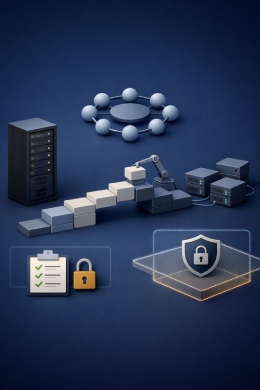
Organizations rarely move from fully centralized to fully decentralized systems in one step. Incremental adoption allows teams to test assumptions, measure costs, and refine governance. Hybrid architectures introduce distributed components where they provide clear value.
This approach reduces risk. Existing workflows remain intact while new capabilities are added gradually. Over time, systems evolve based on evidence rather than aspiration.
Governance Without Central Control
Decentralized systems still require governance. Decisions about protocol changes, dispute resolution, and participation rules must be made collectively. Transparent processes replace internal policy decisions, making tradeoffs visible to all stakeholders.
Effective governance depends on clarity and restraint. Protocols should define what the system guarantees and what it does not. Overreach undermines trust as surely as opacity.
Regulatory Compatibility and Accountability
Decentralization does not eliminate legal responsibility. Designers must consider how obligations around data protection, access rights, and retention apply in distributed contexts. Clear accountability mechanisms are essential.
Well designed systems make compliance easier by limiting data accumulation and clarifying control boundaries. Rather than resisting regulation, decentralization can support it through structural safeguards.
Where Decentralized Models Make Sense Today
Not every system benefits from decentralization. The strongest cases involve shared infrastructure, long lived records, or environments where neutrality and durability matter more than speed alone.
Examples include collaborative research repositories, supply chain records, identity verification, and public registries. In these contexts, reducing reliance on any single operator increases trust and longevity.
Shared Data Environments
Centralized ownership models in the context of multiple organizations contributing to and relying on the same dataset can breed conflicts while decentralized models provide shared stewardship without conferring unilateral control to any single organization.
This construct fosters collaboration but also protects against the withdrawal or misuse of any member. Ownership, when maintained by multiple stakeholders, gives stability and mutual accountability over time.
Long Term Data Preservation
Archives and records intended to persist across decades benefit from distributed storage. Organizations change, funding ends, and priorities shift. Decentralization increases the likelihood that data remains accessible despite institutional turnover.
Verification mechanisms ensure that preserved data remains trustworthy even as original custodians disappear.
Control Through Structure, Not Authority
Incompatible relations exist amid centralization and decentralization: the present notions on centralized data control can be looked upon as outdated. By clearly distributing powers, the control of data will undergo a very much decentralized transformation. Maintaining neutrality, the design principles will assign some duties to a central agent (even when designed to be skewed elsewhere).
#InternationalDataPrivacyDay
— All India Radio News (@airnewsalerts) January 28, 2026
🔹International Data Privacy Day is being observed today to raise awareness about protecting personal data and privacy in the digital age.
🔹Also known as #DataProtectionDay, it was designated in 2006 by the Council of Europe to mark the signing of… pic.twitter.com/Bv1aB7i4NO